Cards on the table, I’m maybe not the best person to review this film. Back in my 20s all my pals got into reading Haruki Murakami, and were like, “You have to read him, you’ll love it!” And I read some, and was like, “Eh… I don’t like this guy.” They were appalled, like I had just said The Godfather was shit or slagged off early Black Sabbath.
Murakami has a very clear literary voice, something which Blind Willow, Sleeping Woman does a very good job of carrying into the film. I just… don’t like that voice. And his depiction of women always makes my skin crawl, attempting to elevate to poetry this sexualisation of sad women, a fetishisation of the noble struggle to negotiate pussy out of these unknowable, mysterious creatures. All of which is to say, I hold opinions which do not make me the most objective judge of this film.
That being said, Blind Willow, Sleeping Woman is pretty much what I’d expect. It’s masculinity in crisis in a meandering set of virtual non-events.
In the aftermath of the 2011 earthquake and tsunami, two men in Tokyo experience a crisis. Komura’s wife leaves him suddenly, and Katagiri takes a nervous breakdown and starts hallucinating a talking man-sized frog. Komura’s wife briefly has a short vignette telling a story about her 20th birthday, but the majority of the film follows Komura stumbling through the shellshock of his marriage ending. Both Katagiri and Komura’s wanderings are less about events and more a vehicle for introspection as they question the choices they’ve made up until this point.
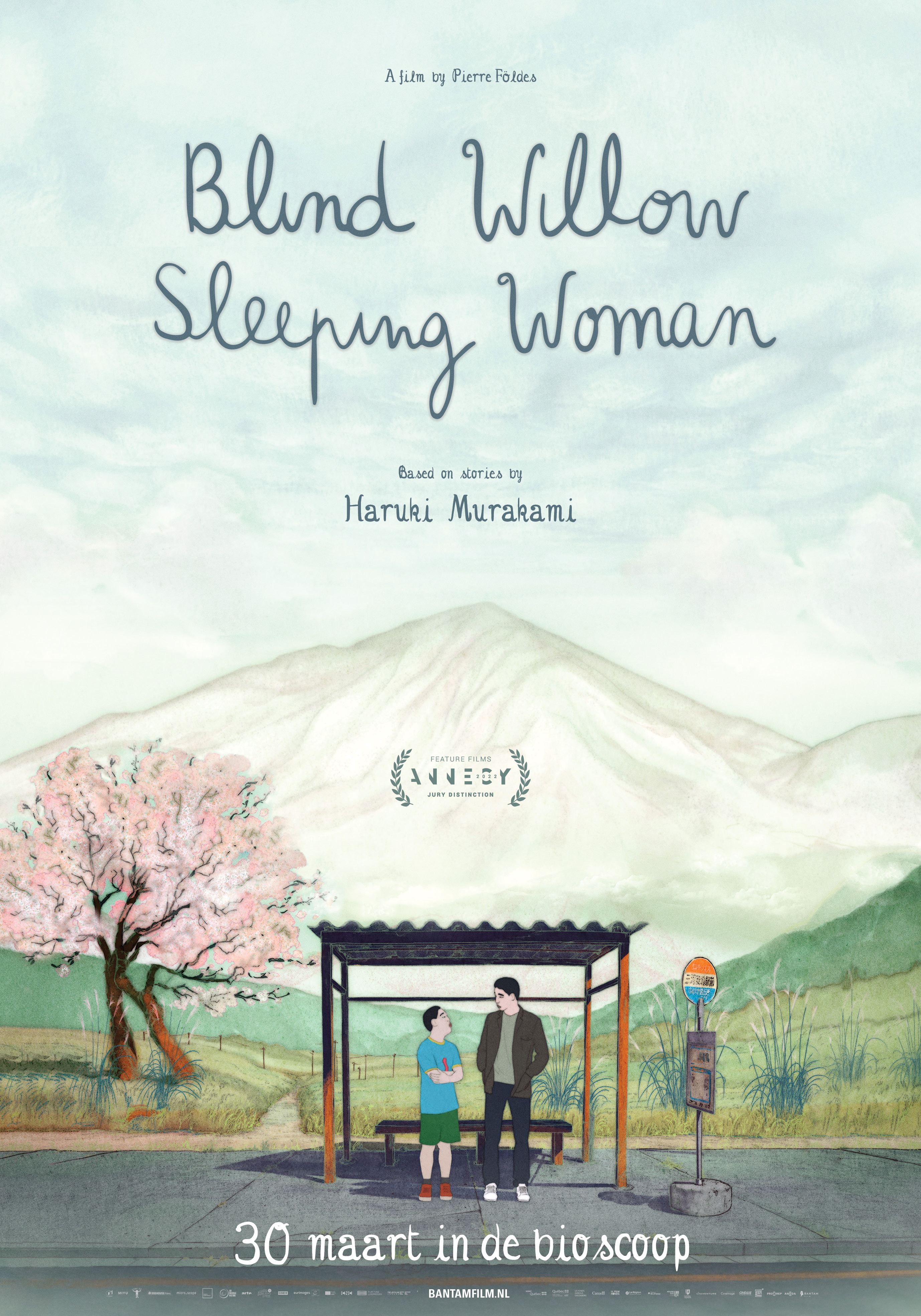
The film is a mixed bag. Some of the animation is beautiful and to be commended, some of it I could take or leave. It was weird to watch the English dub of what is originally French, because it’s set in Tokyo, and you just feel like they should be speaking Japanese. The drifting, dislocated nature of Komura’s emotional state is communicated effectively, but it doesn’t exactly make for riveting engagement with this character who is insular and numb. Katagiri is more sympathetic because he is so profoundly lonely, but it’s not as if that resolves itself in any satisfying way. So there’s no real emotional pay off for investing in these characters.
I think if you like Murakami, this will be your bag. If you don’t, it won’t. And if you’re coming to this cold with no expectations, it’s going to seem like a lot of nothing happening, which you may or may not enjoy.